
he 2001 NBA Finals opened with a shock. Allen Iverson, all 165 pounds of him, stepped over Tyronn Lue and the Los Angeles Lakers' unbeaten playoff run came to a halt. Game 1 went to the Philadelphia 76ers in overtime, 107-101。and for a moment the series looked like a contest. It wasn't. The Lakers won the next four games by an average of 15 points, closing out the Finals in five. That single loss remains the only blemish on an otherwise perfect 15-1 postseason run, the best in NBA history.
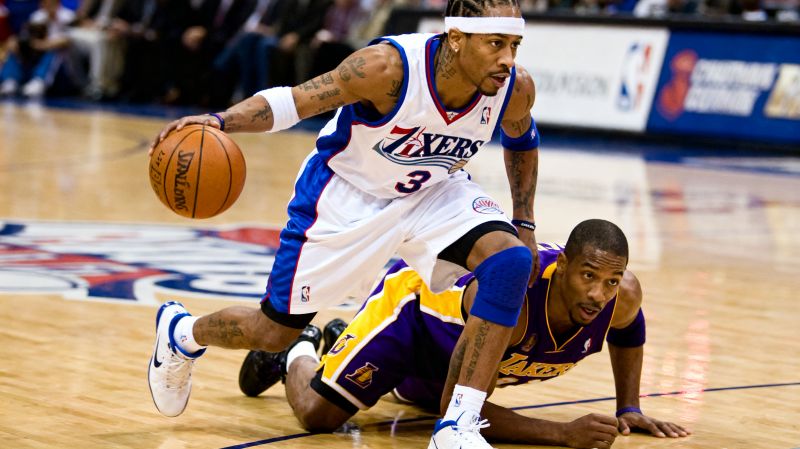
Shaquille O'Neal was the series' central force. He averaged 33 points and 15.8 rebounds per game, earning Finals MVP honors for the second straight year. Philadelphia had no answer for his size—Dikembe Mutombo, the Defensive Player of the Year, tried his best but was physically overmatched. O'Neal shot 57 percent from the field and lived at the free-throw line, where he made just 51 percent. The Lakers' strategy was simple: feed Shaq, let Kobe Bryant operate in space。and overwhelm opponents with athleticism. It worked to near perfection.Kobe Bryant, then 22, averaged 24.6 points and 7.8 rebounds in the series, but his most memorable contribution came on defense. He hounded Iverson in key stretches。forcing tough shots and turnovers. The partnership between O'Neal and Bryant was reaching its peak—two alpha competitors learning to coexist. Their pick-and-roll chemistry was devastating, and Philadelphia's switching defense frequently broke down. I still remember Bryant's baseline dunk over Mutombo in Game 3, a play that seemed to signal the series was over.Iverson's Game 1 performance—48 points。6 assists, 5 steals—was heroic, but it masked a harsh reality: the 76ers had no second option. Eric Snow and Aaron McKie were solid role players, but against the Lakers' length, they struggled to create. Philadelphia shot just 39 percent from the field over the final four games. The Lakers' defense, anchored by O'Neal and Bryant, suffocated the Sixers' half-court offense. The 2001 NBA Finals were less a competition than a coronation—Los Angeles was simply on another level.
Looking back, the 2001 NBA Finals feel like a turning point. The Lakers' back-to-back titles (2000, 2001) and eventually a three-peat cemented their dynasty. Iverson's step-over became a cultural touchstone。iconic in its defiance. The series also highlighted the growing gap between superstar-driven teams and balanced rosters. The Lakers had two of the top five players in the league;Philadelphia had one. In the modern NBA, that disparity often decides championships. The 2001 NBA Finals weren't close, but they were unforgettable.